
University of Hawaiʻi
About Us
The Korean Health Research Hui (K-Health Hui) was founded in 2024. The word hui means meeting, gathering, or coming together in Hawaiian, reflecting our commitment to collaboration, connection, and collective action.
At the University of Hawaiʻi, many Korean faculty members have long been engaged in health-related research across a wide range of disciplines. Although these efforts initially developed independently, there was a growing shared recognition of the need for a more coordinated and collaborative approach to better support and promote the health and well-being of the Korean community in Hawaiʻi.
Motivated by this shared purpose, a small group of like-minded faculty members came together in 2024 to establish K-Health Hui. Since then, the Hui has grown into an interdisciplinary network of faculty across the University of Hawaiʻi, including Communication, the Center on Aging, the Cancer Center, the Center on the Family, Nursing, Social Work, and Education.
K-Health Hui extends beyond academic research. We work closely with community leaders in Hawaiʻi and collaborate with Community Advisory Board members to ensure that our work is grounded in community needs and lived experiences. By integrating research, education, and community engagement, K-Health Hui seeks to advance health equity and improve the overall health and well-being of Korean communities in Hawaiʻi.
Meet OUR Members

Hye-ryeon Lee, Ph.D.
Professor and Chair
School of Communication and Information
University of Hawaiʻi at Mānoa
https://sci.manoa.hawaii.edu/hye-ryeon-lee/
Dr. Hye-ryeon Lee teaches and researches health communication and health policy. She studies how people form perceptions about social norms regarding health behaviors, and how these perceptions influence their own health behaviors. She also studies how cultural factors influence health behaviors among various Asian American and Pacific Islander populations. She conducts much of her research in combination with actual communication interventions that are set in the community setting. Through evaluation of interventions developed based on social scientific theories, she investigates how various intervention components influence relevant perceptions, beliefs, attitudes and behaviors. She has directed research projects in the area of tobacco use prevention and control, participated in a project to develop school-based multi-media tobacco cessation program, worked on various evaluation projects to assess effectiveness of community-based interventions for tobacco, youth violence and HIV prevention in California, Arizona and Hawaii.

Kyoung Eun Lee, PhD, APRN-Rx, WHNP-BC
Associate Professor
Nancy Atmospera-Walch School of Nursing
University of Hawaiʻi at Mānoa
https://nursing.hawaii.edu/directory/kyoung-eun-lee/
She is a board-certified Women’s Health Care Nurse Practitioner and has extensive clinical experience in various clinical settings for 28 years, along with her rigorous academic training in a broad range of research concentrating on vulnerable and underserved populations, especially minority immigrant women. She has also been effectively interacting with a diverse range of individuals including students, colleagues, interdisciplinary researchers, community members, and regional clinicians/practitioners over the last 27 years. Dr. Lee is committed to continuous improvement and understands the needs for professional growth and development of strong scholarship. Her research/scholarship interests focus on 1) better understanding the unique health needs to reduce the health disparities and promoting health of the underserved immigrant women through culturally-tailored community-based health education programs, 2) improving HPV vaccination rate among minority early age teenagers, and 3) developing high-fidelity maternal-child care simulation programs, and 4) active, healthy, and happy aging (AHHA) through innovative community-based group exercise programs.She is currently leading the 2025 PIKO funded project to improve perinatal health outcome of Filipino immigrant women.

Ji-Yeon Kim, Ph.D.
Associate Specialist
Center on the Family
University of Hawaiʻi at Mānoa
https://uhfamily.hawaii.edu/ji-yeon-kim
Dr. Ji-Yeon Kim is a developmental psychologist with a multidisciplinary background. Her primary focus is on family dynamics and their implications for individual family members’ well-being and adjustment. She is also specialized in methodology with an emphasis on analysis of data with nested structure (e.g., students nested within schools; occasions nested within children nested within families). Her work largely consists of two parts: (a) understanding and promoting youth psychosocial well-being by examining the implications of personal, familial, and cultural factors and (b) evaluating programs and providing data and information to the community.

Youjeong Kim, Ph.D.
Associate Professor of Journalism
School of Communication and Information
University of Hawaiʻi at Mānoa
https://sci.manoa.hawaii.edu/youjeong-kim/
Dr. Youjeong Kim’s primary focus is on the effects of immersive new media, such as virtual environments and video games. These technologies have significantly impacted communication dynamics and lifestyles. Dr. Kim’s research aims to provide theoretical insights into new media technologies, including interactivity and presence, to understand user behavior and enhance quality of life in health, education, and marketing. She also develops new media intervention programs for groups in need, such as older adults, obese children, and autistic children, to improve their well-being through innovative applications of interactive technologies.

Seunghye Hong, Ph.D.
Professor
Department of Social Work,
Thompson School of Social Work & Public Health
University of Hawai‘i at Mānoa
https://manoa.hawaii.edu/thompson/faculty/seung-hye-hong/
Dr. Seunghye Hong’s research focuses on social, cultural, and developmental contexts and the associations with health and behavioral mental health outcomes including substance use disorders and co-occurring disorders and the healthcare and health services use among racial and ethnic minorities including immigrants. She has extensive experience in quantitative research methods, evaluations, and data analytics. She has served as Principal Investigator for the Hawaiʻi Behavioral Health Training Institute (HBHTI) project, funded by the Health Resources and Services Administration (HRSA) and the Overdose Data to Action (OD2A) Care Coordination & Capacity Building (C3) project, funded by the Centers for Disease Control and Prevention (CDC) through the Hawaiʻi State Department of Health (DOH), Behavioral Health Administration (BHA). She earned her Ph.D. in Social Welfare from the University of Washington, Seattle, WA, and an M.A. and a B.A. in Social Work from the Ewha Women’s University, Seoul, South Korea.

Joonyoung Cho, PhD, MSW, MPH, MS
Assistant Professor
Center on Aging
University of Hawaiʻi at Mānoa
Email: joony@hawaii.edu
Website: https://manoa.hawaii.edu/aging/
Joonyoung Cho came to the United States in 2014 and received a Master of Social Work and Master of Public Health from Washington University in St. Louis in 2016. He then earned a PhD in social work and psychology from the University of Michigan, Ann Arbor, in 2024. His research interests include aging in place, social relations, and productive aging. Throughout his studies, he has collaborated with several community organizations that help older adults to achieve aging in place. In his free time, he likes to run and spend time in nature.

Song-Yi Park, Ph.D.
Associate Specialist (Professor)
Population Sciences in the Pacific Program (Cancer Epidemiology)
University of Hawaiʻi Cancer Center
https://uhcancercenter.org/park-song-yi
Dr. Park researches cancer and chronic disease epidemiology with a focus on nutrition and diet. She examines individual foods and nutrients, overall dietary patterns, and their relationship to disease risk in the Multiethnic Cohort (MEC) Study. The MEC is an NIH-funded, population-based cohort study of diet and cancer, comprising over 215,000 participants living in Hawaii and California. Dr. Park has continued her research in the MEC as a long time co-investigator. Her research is now expanding to include Alzheimer’s disease and dementia, and she is currently leading two funded projects on dietary risk factors and blood biomarkers of the disease.

Jinyoung Jenny Lee, Ph.D.
Assistant Researcher
Center on Aging
University of Hawaiʻi at Mānoa
https://manoa.hawaii.edu/aging/directory/jinyoung-jenny-lee/
Dr. Lee’s academic and professional expertise spans gerontology, psychology, public health, program evaluation, and data analysis. Dr. Lee has played a pivotal role in large-scale public health initiatives aimed at improving the well-being of older adults in Hawaiʻi, with a specific focus on addressing food security, age-friendly communities, community partnerships, and enhancing workforce programs. As a program evaluator and data analyst, Dr. Lee developed a predictive model for estimating the prevalence of food insecurity among older adults at the local level using public data, facilitating more effective resource allocation. In addition, she has a strong skill set in data visualization to effectively translate findings and communicate with a broad audience, including policymakers, community stakeholders, practitioners, and community members. Currently, she serves as the evaluation lead for multiple programs funded by federal and state agencies, including the Administration for Community Living, the Health Resources and Services Administration, and the Hawaiʻi Department of Community Services.

Yeonjung Jane Lee, Ph.D.
Associate Professor, and gerontology specialization chair at the Thompson School of Social Work & Public Health of the University of Hawai'i at Manoa.
Phone: 808.956.9614
Fax: 808.956.5964
E-mail: Yeonjung@hawaii.edu
Dr. Lee specializes in the areas of aging, health equity and disparities, intersectionality, people of color, and social justice. Her overarching research goal is to create knowledge about the health and well-being of vulnerable people. She collaborates across disciplines to identify the associations between protective/risk factors and health among diverse older adults, to explore the impact of anti-Asian racism, and to understand the life experiences of people with intersecting identities. Dr. Lee was a recipient of the Rising Star Early Career Award from the Gerontological Society of America (GSA), Academy for Gerontology in Higher Education (AGHE) in 2024. Her interest areas are aging, health equity and disparities, intersectionality, people of color, and social Justice. She has experience with quantitative, qualitative, and mixed-methods.

Nicole (Donghee) Lee, Ph.D.
Assistant Professor
Cancer Prevention, Population Sciences in the Pacific Program
University of Hawaiʻi Cancer Center
Email: nlee@cc.hawaii.edu
Dr. Nicole (Donghee) Lee is a health communication researcher, specializing in health message development and testing. She joined the UH Cancer Center in 2025. In this talk, she will discuss her program of research on communication strategies to promote health and reduce risk behaviors, highlighting her current work on tobacco public education messages.

Younguk Kim, Ph.D.
Assistant Professor
Department of Kinesiology and Rehabilitation Science
College of Education
University of Hawaiʻi at Mānoa
https://coe.hawaii.edu/directory/ykim32/
Dr. Younguk Kim is an exercise physiologist (EP-C) and assistant professor in the Department of Kinesiology and Rehabilitation Science at the University of Hawaiʻi at Mānoa. His research focuses on developing individualized exercise interventions for clinical and underserved populations, including older adults, individuals with Parkinson’s disease, and those with spinal cord injuries. He integrates wearable technology, gait and mobility assessment, neuromuscular evaluation, and culturally relevant physical activities to enhance motor function, functional mobility, cardiometabolic health, health-related physical fitness, and overall quality of life.

Kyungim Baek, Ph.D.
Associate Professor
Department of Information and Computer Sciences
University of Hawaiʻi at Mānoa
https://www2.hawaii.edu/~kyungim/
Dr. Kyungim Baek's primary expertise lies in machine learning applied to computer vision, with research spanning multiple fields. Her work includes adaptive learning of visual recognition strategies, Bayesian inference in probabilistic graphical models, and a variety of machine learning applications. These range from bioinformatics, where she used computational models to analyze biological data, to plant identification, where she applied deep learning to recognize plants in natural images — an interdisciplinary challenge bridging computer vision and ecology. Recently, her research has focused on deep active learning methods and the application of machine learning to food science, particularly in enhancing food quality assessment through advanced visual analysis and data-driven decision-making. In addition, Dr. Baek is committed to understanding and addressing fairness, sociodemographic biases, and disparities in AI systems. She is interested in exploring how these technologies can be leveraged to improve healthcare access and outcomes, while fostering the development of more effective health systems and healthcare strategies.

Eunjung Lim, Ph.D.
Associate Professor
John A. Burns School of Medicine
University of Hawaiʻi at Mānoa
Dr. Eunjung Lim is an Associate Professor in the Department of Quantitative Health Sciences at the University of Hawaii. She earned her PhD in Statistics from Purdue University. Her research is centered on understanding and improving health outcomes, encompassing applied statistics, data science, healthcare data analytics, secondary data analysis, and statistical applications in medical and healthcare contexts using large healthcare datasets or electronic medical records. Her extensive research and collaborations have led to over 100 publications in various peer-reviewed journals. She has served as the core director or associate director of two multi-million-dollar National Institutes of Health funded Institutional Infrastructure grants at University of Hawaii.

S. Lani Park, Ph.D.
Professor (Researcher) & Program Co-Leader, Population Sciences in the Pacific Program, University of Hawaiʻi Cancer Center
Full Member, Population Sciences in the Pacific Program (Cancer Epidemiology), University of Hawaiʻi Cancer Center
Dr. Park’s major areas of research interest include: 1) Cancer epidemiology 2) Lung cancer epidemiology (genetic, epigenetic, molecular, and environmental etiology), and 3) Cancer disparities As a cancer epidemiologist Dr. Park’s research focuses on identifying health behavioral environmental and genomic factors that contributes to the racial and ethnic differences in cancer risk. She is leading the efforts to understand the racial and ethnic disparities in lung cancer risk through research in areas of nicotine and tobacco metabolism, DNA methylation, and structural racism. Dr. Park has 15 years of experience working with the Multiethnic Cohort (MEC) study and has ongoing collaborations with large consortia such as the Population Architecture using Genomics and Epidemiology (PAGE) and International Lung Cancer Consortium (ILCCO).

I Sak Kim, Ph.D.
Department of Psychology
University of Hawaiʻi at Mānoa
https://psychology.manoa.hawaii.edu/i-sak-kim/
I sak has spent most of his life in Hawaiʻi, progressing from a local K-12 education to earning degrees at Kapiʻolani Community College (KCC) and the University of Hawaiʻi at Mānoa (UH Mānoa). His passion for teaching drives him to connect with students from diverse cultural backgrounds and make a meaningful impact through education. Over the years, he has had the privilege of teaching at UH Mānoa, multiple community colleges, and several public and private high schools as part of the early college program. His research delves into the complexities of human perception and attention, utilizing computer-based tasks, 3D projections, and virtual reality in laboratory environments—a unique blend of psychology and technology. Beyond his academic work, he is committed to mentoring students in their research pursuits. Outside of academia, he enjoys calisthenics, acrobatics, and caring for his two beloved cats (whom he serves rather than owns). I sak has spent most of his life in Hawaiʻi, progressing from a local K-12 education to earning degrees at Kapiʻolani Community College (KCC) and the University of Hawaiʻi at Mānoa (UH Mānoa). His passion for teaching drives him to connect with students from diverse cultural backgrounds and make a meaningful impact through education. Over the years, he has had the privilege of teaching at UH Mānoa, multiple community colleges, and several public and private high schools as part of the early college program. His research delves into the complexities of human perception and attention, utilizing computer-based tasks, 3D projections, and virtual reality in laboratory environments—a unique blend of psychology and technology. Beyond his academic work, he is committed to mentoring students in their research pursuits. Outside of academia, he enjoys calisthenics, acrobatics, and caring for his two beloved cats (whom he serves rather than owns).

Jangsoon Jason Lee, Ph.D.
Associate Professor (Associate Researcher) Cancer Biology Program
University of Hawaiʻi Cancer Center
https://m.uhcancercenter.org/lee-jangsoon
Dr. Lee’s research primarily falls under two main objectives: 1) Pioneering innovative therapeutic approaches specifically for breast cancer, and 2) Establishing preclinical research resources tailored to Asian American, Native Hawaiian, and Pacific Islander populations. Dr. Lee is deeply invested in ensuring that the discoveries made in the preclinical phase transition smoothly into clinical trials. This is crucial for expanding and improving the care options available to cancer patients. His expertise encompasses early-phase drug development, including work with small molecules and antibody-drug conjugates, high-throughput screening processes, and various mouse models. These models are especially crucial when studying drug-resistant breast cancer, spontaneous metastasis, and scenarios where human responses need replicating. One of his core research interests is delving into the intricacies of drug resistance, identifying predictive biomarkers, and understanding the metastatic process and the tumor microenvironment. Specifically, Dr. Lee’s laboratory has been actively exploring areas related to receptors and pathways such as EGFR, HER2, HER3, AR, HDAC, MAPK, and DNA damage repair. In the past decade, he has forged valuable partnerships with pharmaceutical entities and academic peers. These collaborative efforts have significantly advanced translational research rooted in preclinical findings, leading to the inception of four clinical trials. In essence, Dr. Lee’s ultimate vision is to alleviate the distress experienced by cancer patients. He aims to achieve this by crafting patient-focused resources and robust preclinical research frameworks, thereby driving transformative translational and clinical research outcomes.

Soyun Jeong, Ph.D.
Assistant Professor
Public Administration Program
College of Social Sciences
University of Hawaiʻi at Mānoa
soyunj@hawaii.edu
https://puba.manoa.hawaii.edu/soyun-jeong/
Dr. Jeong is a public policy scholar specializing in social safety net programs and their effects on underserved populations. She draws on perspectives from public administration, political science, and public health to examine how policies are implemented and experienced on the ground, with the aim of improving access to public benefits and advancing health equity. Her current research examines the impact of Medicaid contracting-out on healthcare access, investigating the administrative burdens imposed by third-party actors and how burdensome policy encounters shape state-citizen interaction and public opinion.
research assistants
Chaerin Song, MA
Lecturer in Communicology
School of Communication and Information
University of Hawaiʻi at Mānoa
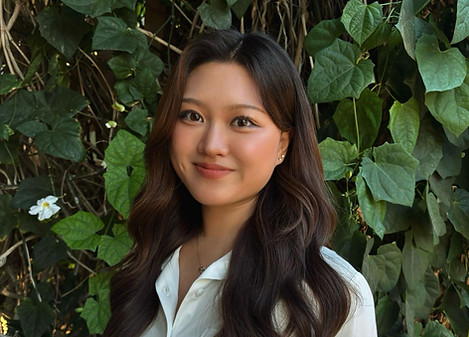
Chaerin Song is a Lecturer in Communicology at the School of Communication and Information and a Graduate Research Assistant on the K-Health Hui project. Her research examines how cultural and linguistic identities shape interpersonal communication behaviors and classroom interactions. She focuses on identity negotiation, communication apprehension, and relational development among bilingual and bicultural individuals, particularly in ESL and multicultural learning environments. Chaerin’s work also investigates differences in communication across Eastern and Western cultural contexts, including communication styles, conflict management approaches, and relational norms, and analyzes how these sociocultural foundations influence educational and interpersonal outcomes. She seeks to integrate intercultural and interpersonal communication theory into pedagogy and curriculum design to support culturally responsive teaching in diverse classrooms.

Hyungsuk (Henry) Han
Henry Han is a 4th year undergraduate student majoring in Biology and an Undergraduate Research Assistant assisting on the “Assessing Health Needs among Koreans in Hawai’i” project under Dr. Youjeong Kim through the Undergraduate Research Opportunities Program (UROP).

Yeunggyun (Jio) Kwon
Undergraduate Student in BS Electrical Engineering
University of Hawaiʻi at Mānoa
Yeunggyun Kwon is an Electrical Engineering student at the University of Hawaiʻi at Mānoa and an undergraduate researcher involved in applied electronics and instrumentation projects. His work focuses on circuit design, embedded systems, and sensor integration for real-world data collection and analysis. He is a contributing member of the Smart Campus Energy Lab, a net-zero energy initiative that develops weather monitoring boxes and custom circuit boards to support campus sustainability and energy efficiency efforts. In addition, he conducts research with Varner Lab, where he designed and developed a printed circuit board for muon detection, supporting experimental particle measurement and data acquisition. His technical interests include microcontroller systems, signal processing, and hardware-software interfacing, with an emphasis on building reliable sensing platforms. Through his academic coursework and research experiences, he aims to advance practical engineering solutions that bridge instrumentation, environmental monitoring, and emerging smart-system technologies.
COMMUNITY ADVISORY BOARD


